

Automatic and Accessible Entrances: AODA Requirements for Ottawa Businesses
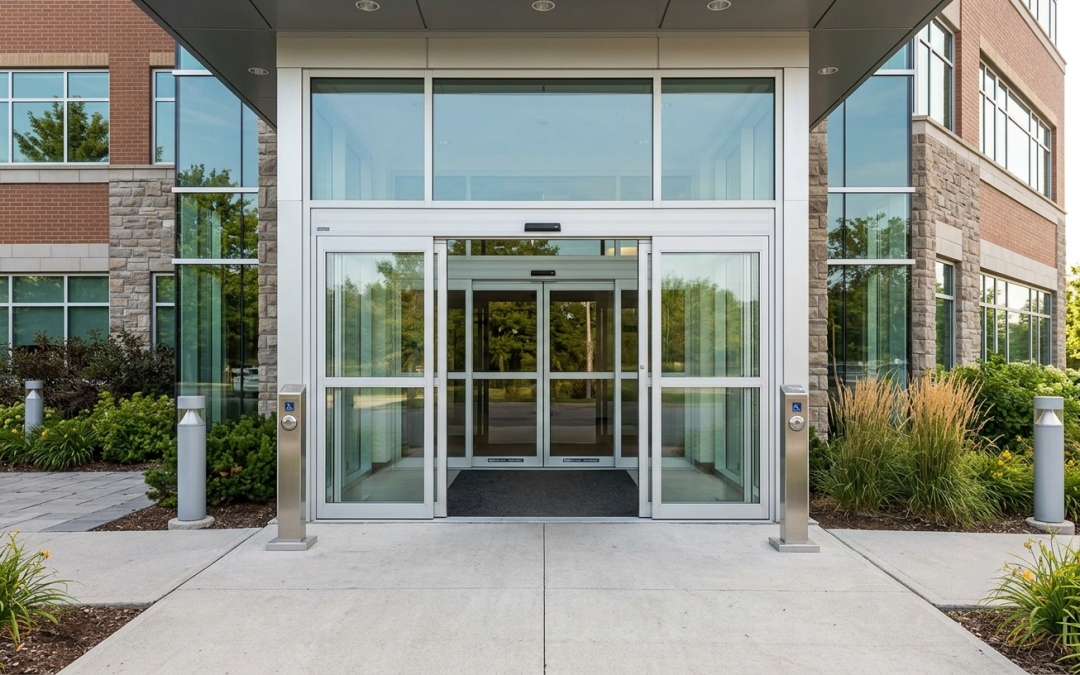
An accessible entrance is a building entry that people of all abilities — including those using wheelchairs, walkers, or mobility devices, and those with low vision — can find, approach, open, and pass through independently. In Ontario, accessibility expectations for businesses flow from the Accessibility for Ontarians with Disabilities Act (AODA) and from the barrier-free design provisions of the Ontario Building Code, which apply when buildings are constructed or significantly renovated.
This article explains the concepts behind accessible entrance requirements in Ontario in plain language. It deliberately avoids quoting specific measurements or clause numbers: requirements depend on your building type, the year and scope of construction or renovation, and the current versions of the legislation and code. Always verify what applies to your project with the City of Ottawa building department, a code consultant, or an accessibility professional before committing to a design.
Centennial Glass has installed and serviced commercial entrances across Ottawa since 1967, working to Ontario Building Code compliance and barrier-free design requirements on commercial installations — so we see daily how accessibility plays out at the front door.
Why the Entrance Is Where Accessibility Starts
For a customer who cannot get through the door, nothing else about your accessibility efforts matters. Entrances are also where Ontario’s accessibility framework and ordinary good business overlap most clearly: an entrance that works for a wheelchair user also works for a parent with a stroller, a courier with a dolly, and a customer carrying coffee. Modern commercial glass doors and entrance systems are designed with exactly this dual purpose — secure and attractive, but also genuinely usable by everyone.
There is a compliance dimension too. AODA obligations phase in over time and include standards for the design of public spaces, while the Ontario Building Code sets the technical barrier-free requirements that apply to construction and renovation. Retrofitting an entrance later is almost always more expensive than getting it right when a storefront is being built or replaced.
Key Concepts in Accessible Entrance Design
While the specific numbers must come from the current code, the recurring concepts are consistent:
- Clear width. The doorway must provide enough unobstructed passage for mobility devices when the door is open. Narrow or partially blocked openings are among the most common entrance barriers.
- Maneuvering space. A person using a mobility device needs level, unobstructed space on both sides of the door to approach, operate, and pass through it — vestibules need particular attention so users are not trapped between two sets of doors.
- Opening force and hardware. Doors must be operable without tight grasping or twisting and without excessive force. Lever handles, push bars, and properly adjusted closers matter as much as the door itself.
- Automatic door operators. Power operators activated by push buttons or sensors are the most reliable way to make heavy commercial doors usable by everyone, and they are increasingly expected at public entrances. Placement of activation buttons — reachable, visible, and clear of the door swing — is part of the design.
- Thresholds and approaches. Level or minimally raised thresholds, slip-resistant surfaces, and ramped approaches where there are grade changes.
- Visibility of glass. Full-glass doors and sidelites must be visually identifiable so people with low vision do not walk into them — typically addressed with decals, frosted bands, or contrasting markings at specified heights. Safety glazing such as tempered glass is required where impact is a risk, so even if someone does make contact, the glass protects rather than endangers them.
Automatic Doors: What Installation Involves
Adding an automatic operator to an existing entrance is one of the most common accessibility upgrades Ottawa businesses make, and it is usually less disruptive than owners expect. The work involves assessing the existing door and frame (operators need sound framing and properly functioning hardware to work reliably), installing and wiring the operator, mounting activation buttons in accessible locations, and adjusting opening speed and hold-open times.
Because operators put daily mechanical stress on doors, the condition of the underlying system matters. A door that drags, a closer that slams, or glass that is cracked should be corrected first — commercial door glass repair and hardware service is often the sensible first step before automation. If the entrance system itself is aging, it can be more economical to replace the whole storefront and entrance system with one designed around accessibility from the start.
Choosing a Glazing Partner for Accessibility Work
Accessible entrances sit at the intersection of glazing, hardware, and code — so the installer matters as much as the products. Look for a company that works to Ontario Building Code and barrier-free requirements as a matter of course, coordinates with your code consultant or contractor, and stands behind the installation afterward, because doors and operators need adjustment over their lives. That after-care is where long-term relationships are built:
“We are still so pleased with our glass sliding door and excellent service from Centennial Glass. After almost 4 years, our office door needed an adjustment- the service tech came in quickly and adjusted the door in a matter of minutes.” — Emily Mansfield, 5★
Frequently Asked Questions
Does my Ottawa business have to have an automatic door?
It depends on your building type, when it was built or renovated, and which AODA and Ontario Building Code provisions apply. New construction and major renovations face barrier-free requirements that existing unaltered buildings may not. Verify your specific obligations with the City of Ottawa or an accessibility consultant — and remember that exceeding minimums is often good business regardless.
What makes a glass door AODA-friendly?
In concept: adequate clear width, easy-to-use hardware, manageable opening force or a power operator, a level threshold, and visual markings so the glass is easily seen. Safety glazing protects anyone who does make contact with the door.
Can an automatic operator be added to my existing storefront door?
Usually, yes — provided the door, frame, and hardware are in good condition. An assessment confirms whether the existing entrance can support an operator or whether repairs or replacement should come first.
Who is responsible for verifying code compliance?
Ultimately the building owner, supported by their designer, code consultant, and municipal permit process. A qualified glazing contractor works to the applicable requirements, but confirming which requirements apply to your specific project should be done through the permitting and design professionals.
Make Your Entrance Work for Everyone
From new accessible storefront systems to automatic operators and door hardware service, Centennial Glass has been helping Ottawa businesses open their doors — to everyone — for over 55 years. Call us at 613-738-9500 or contact Centennial Glass to discuss your entrance.