

Home Gym Mirrors: Sizes, Options and Installation
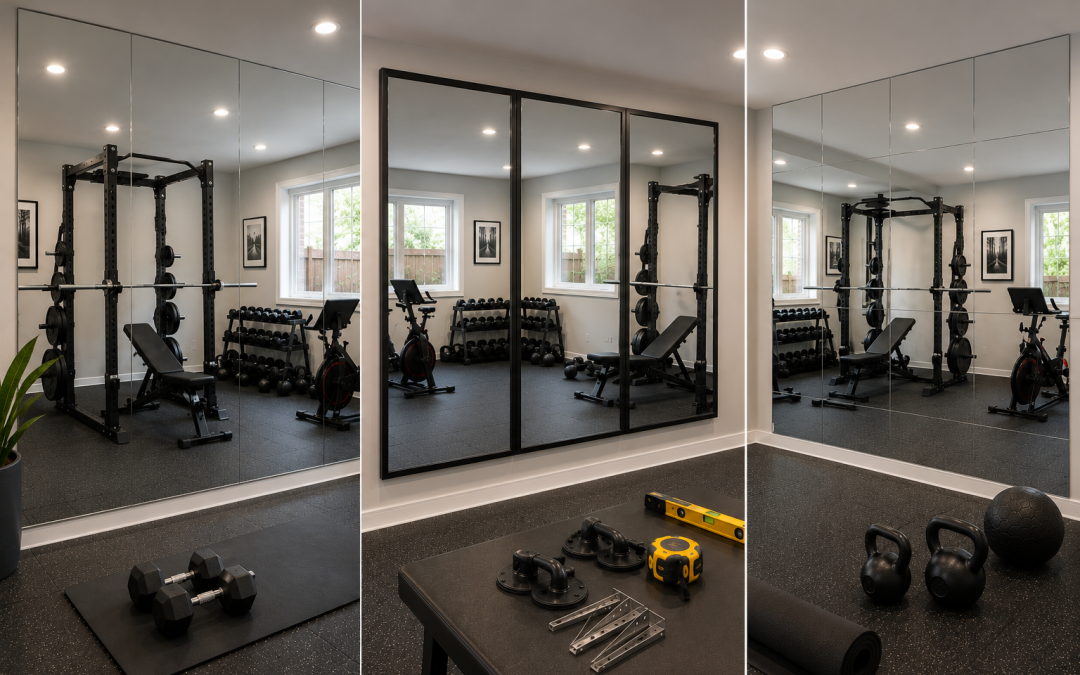
A gym mirror is a large, wall-mounted sheet of mirror glass — typically 1/4 inch thick with polished edges and a safety backing — installed so you can check your form while you train. Whether you are outfitting a basement home gym or a fitness studio, the planning questions are the same: how big, what glass options, how it mounts, and who installs it.
Centennial Glass has fabricated and installed gym and studio wall mirrors across Ottawa since 1967. Because we cut, edge, and polish every mirror in-house, we can build mirror walls to any size or shape — and the same fabrication behind commercial fitness spaces like the Pure Yoga studio goes into every basement gym.
Why Put Mirrors in a Home Gym?
Mirrors in a gym do three jobs. Form checking: watching your alignment during squats, deadlifts, and stretches catches technique errors before they become injuries. Light and space: a mirror wall visually doubles a basement gym and bounces limited light around the room. Motivation: a bright, open space simply feels more like a gym, so you use it more.
What Size Gym Mirror Do You Need?
The right size depends on what you train and how much wall you can give it.
- Height: Most gym mirrors are at least 48 inches (4 feet) tall. To see your full body through lifts and floor work, 60–72 inches is better. Studios usually run mirrors close to floor-to-ceiling.
- Width: Plan roughly 36–48 inches of mirror per person training. A single panel suits one rack or station; a wall of panels suits open floor training, dance, or yoga.
- Mounting height: Gym mirrors typically sit with the bottom edge 12–24 inches off the floor — clearing baseboards and dropped weights, but low enough to show your feet. For floor work like yoga or physio, mount lower.
- One large panel vs. several: Single panels give a seamless reflection but are harder to transport and install. Multiple panels set edge to edge are the standard approach for wide walls; professionally fabricated edges keep the seams tight.
Measure the wall and think about sight lines from where you actually train. For more planning detail, see our guide on what to consider when buying home gym mirrors in Ottawa.
Glass Options: Thickness, Edges and Safety Backing
Thickness. Quality gym mirrors are 1/4 inch (6 mm) glass. Thinner mirror flexes on imperfect walls, which distorts the reflection — exactly what you do not want when checking form.
Edgework. Exposed edges should be flat-polished so they are smooth and safe. In-house fabrication means edges, corners, and any cutouts (for outlets, switches, or TV mounts) are finished to spec before the mirror arrives.
Safety backing. A safety backing film bonded to the rear of the mirror holds fragments together if the glass ever breaks — instead of shedding shards onto a training floor. For any space with flying medicine balls, dropped barbells, or kids, safety-backed mirror is the responsible spec, and it is standard for commercial gym and fitness mirrors.
Quality. A gym mirror should reflect without waviness. Flatness comes from glass quality and a flat wall behind it — so prep and installation matter as much as the glass.
How Gym Mirrors Are Mounted
Gym mirrors are not hung like framed art; they are mechanically supported and bonded:
- J-channel (bottom channel): an aluminum channel fastened to the wall structure carries the mirror’s weight along its bottom edge. The cleanest, strongest base for large panels.
- Mirror clips: discreet clips at top and bottom secure smaller panels mechanically.
- Mirror mastic: a mirror-safe adhesive bonds the back of the glass to the wall, preventing flex and rattle. Ordinary construction adhesive can damage mirror backing and must not be used.
- Wall prep: the wall should be flat, dry, and sound. Out-of-plumb walls and bowed studs telegraph through the glass as distortion, so shimming and prep come first.
A typical home gym panel weighs well over 50 pounds, and full-height studio panels far more. Moving, positioning, and bonding glass at that scale is specialized two-person work with proper glass-handling equipment — the part of the project to leave to professionals.
What Affects the Cost of a Gym Mirror?
Rather than a one-size-fits-all number, gym mirror pricing depends on a handful of factors:
- Total size and number of panels — the biggest driver
- Glass thickness and safety backing — 1/4 inch safety-backed mirror costs more than thin décor mirror, and is worth it
- Edgework and cutouts — polished edges, notches for outlets, or custom shapes add fabrication time
- Site access and wall condition — basement stairs, tight corners, and walls needing prep affect installation effort
- Delivery and installation — large panels require careful transport and a professional crew
An on-site measure is the reliable way to get a firm price for your wall. After 55+ years in business, our position is simple: no project too large, no project too small.
Why Have Your Gym Mirror Professionally Installed?
A gym mirror is the largest, heaviest piece of glass most homeowners will ever put on a wall, in the one room where weights fly. Professional installation means exact measurement, correct channel and mastic, tight seams, and a distortion-free result — safely. Gino Price put it this way:
“Purchased a custom order mirror for my home gym. Customer Service was exceptional even though I was picky with the measurements. Installers were very professional and courteous.” — Gino Price, 5★
Home gyms are also rarely a one-mirror job — many customers bundle other glass work into the same visit, as Mike Ziebarth did:
“Shower, stair railing & gym mirror installed. Thomas and Kurt we’re great!” — Mike Ziebarth, 5★
From a single custom mirror to a full studio wall, the process is the same: measure, fabricate in-house, deliver, and install.
FAQ
How thick should a home gym mirror be?
1/4 inch (6 mm) is the standard for gym mirrors. It resists flexing and distortion on large panels. Thin décor mirrors are not suited to training walls.
How high off the floor should gym mirrors be installed?
Typically 12–24 inches off the floor — above baseboard and equipment height, but low enough to see your feet during lifts. Yoga and dance spaces often mount lower for floor work visibility.
Can I use regular mirrors instead of gym mirrors?
Regular décor mirrors are usually thinner, lack safety backing, and are not fabricated for edge-to-edge wall mounting. In a room with weights and fast movement, safety-backed 1/4 inch mirror is the right spec.
Do gym mirrors come in custom sizes?
Yes. Mirror glass can be cut to any size or shape, with polished edges and cutouts where needed — that is the advantage of working with a fabricator rather than buying stock panels.
Ready to Plan Your Gym Mirror Wall?
Tell us about your space and we will handle measuring, fabrication, and installation — for home gyms, studios, and commercial fitness facilities alike. Call us at 613-738-9500 or contact Centennial Glass for a quick quote.