


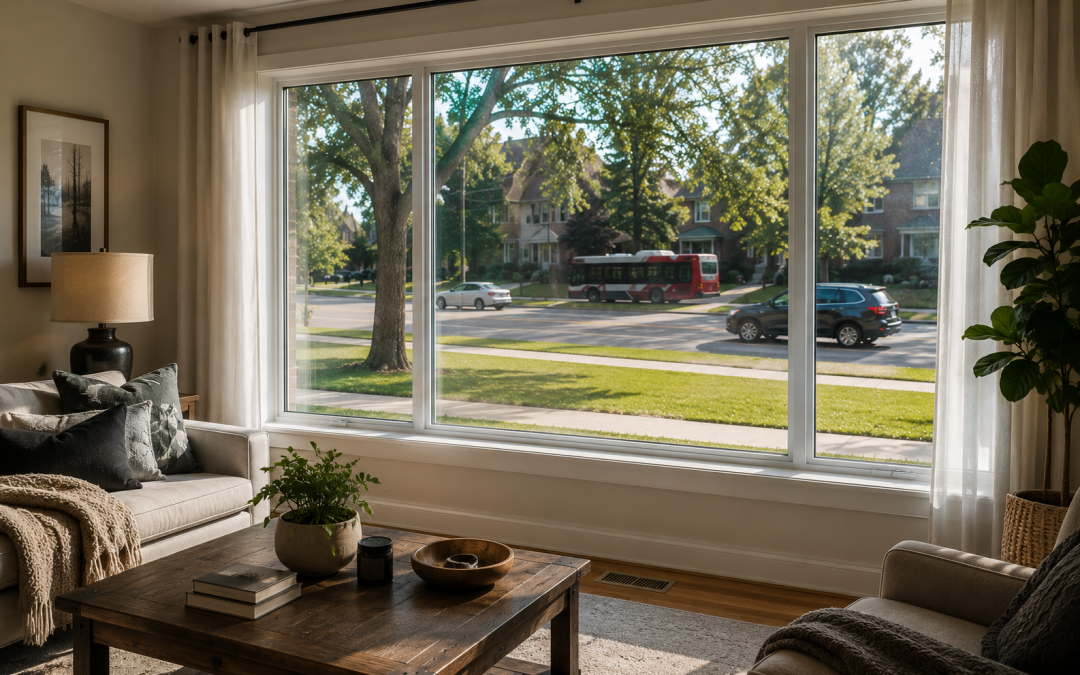
Soundproof windows are windows designed to block significantly more outside noise than standard glass, using techniques like laminated glass, thicker or asymmetric panes, wider air spaces in the sealed unit, and tight, well-sealed installation. No residential window is perfectly “soundproof” — the honest term is sound-reducing — but the right combination of glass and sealing can turn constant traffic noise into a faint background hum.
For homes near Ottawa’s busier corridors — or bedrooms facing a bus route — window upgrades are usually the single most effective noise improvement you can make, because windows are almost always the weakest acoustic link in an exterior wall. Centennial Glass has been fabricating and installing glass in Ottawa since 1967, and noise complaints are one of the most common reasons homeowners call us about their windows.
Why Sound Gets Through Windows
Sound is vibration, and it passes through whatever vibrates easily. Ordinary window glass is thin, light, and rigid — ideal for transmitting sound. Noise enters your home through windows in three main ways:
- Through the glass itself. A single thickness of standard glass vibrates like a drumhead.
- Through identical panes resonating together. Two panes of the same thickness can vibrate in sympathy at the same frequencies, which is why a basic double-pane unit is only modestly quieter than single glass.
- Through gaps and leaks. Air gaps transmit sound directly. If you can feel a draft, you can hear through it too. Worn seals and gaps are among the most frequent issues we cover in common residential window problems.
Effective noise reduction attacks all three paths at once.
Laminated Glass: The Core of a Quieter Window
Laminated glass is two sheets of glass permanently bonded to a flexible interlayer. That interlayer does two jobs: it holds the glass together if broken (which is why it is also used as safety and security glass), and it damps vibration, absorbing sound energy instead of passing it through. The result is noticeably better acoustic performance than ordinary glass of the same thickness, along with UV reduction as a bonus. Our laminated glass page covers the safety and sound benefits in more detail.
For demanding situations — main roads, commercial neighbours — purpose-built acoustic glazing combines laminated glass with engineered pane thicknesses and air spaces to target the frequencies that bother people most, like traffic rumble and voices.
Building a Quieter Sealed Unit
Most modern windows contain an insulated sealed unit — two or three panes sealed around a spacer. The acoustic trick is to make the panes work against each other rather than in sympathy:
- Asymmetric panes. Pairing glass of different thicknesses means each pane blocks the frequencies the other lets through.
- One laminated pane. Replacing one standard pane with laminated glass adds damping inside the unit.
- Wider air space. More distance between panes improves both thermal and acoustic insulation.
The encouraging news for homeowners: if your frames are in good condition, a sound-reducing sealed unit can often be fabricated to fit your existing windows, upgrading the glass without replacing the whole window. See our overview of insulated glass units for how these are built. Centennial fabricates glass in-house in Ottawa, so units are made to your exact measurements.
Don’t Skip the Cheap Fix: Seal the Leaks
Before investing in acoustic glass, deal with air leaks — sound rides through them no matter how good your glass is. Worn weatherstripping, failed perimeter caulking, and loose-fitting sashes all leak noise as well as heat. Our guide to preventing window air leaks during Ottawa winters doubles as a noise checklist: every draft you eliminate is noise you eliminate. Weatherstripping replacement is a quick, inexpensive repair, and it makes whatever glass you have perform to its potential.
What Combination Is Right for Your Home?
A practical sequence for most Ottawa homes:
- Seal first. Fresh weatherstripping and caulking — small cost, immediate improvement.
- Upgrade the glass in the noisiest rooms. Bedrooms and home offices facing the street benefit most from laminated or acoustic sealed units.
- Replace windows where frames are failing. If a window is leaky and at end-of-life anyway, a new, properly sealed window with an acoustic glass package addresses every noise path at once.
Because Centennial Glass handles repairs, glass fabrication, and full window installation — for both homes and businesses, roughly 50/50 — we can recommend the least expensive step that will actually solve your noise problem, rather than defaulting to full replacement.
FAQ: Soundproof Windows
Do soundproof windows really work?
Sound-reducing windows make a real, noticeable difference — laminated glass, asymmetric panes, and tight sealing can cut perceived street noise dramatically. No window eliminates noise entirely, so be wary of anyone promising silence.
Is triple-pane glass better than double-pane for noise?
Not automatically. Three identical panes with narrow gaps can perform similarly to double glazing. For noise specifically, a laminated pane and varied glass thicknesses matter more than simply adding a third pane.
Can I make my existing windows quieter without replacing them?
Often, yes. If the frames are sound, replacing the sealed units with laminated or acoustic glass and renewing the weatherstripping addresses both major noise paths at a fraction of full replacement cost.
Which rooms should I upgrade first?
Start where noise hurts most — usually bedrooms and offices facing the street. Upgrading two or three windows in key rooms often delivers most of the benefit for a fraction of a whole-home project.
Talk to Ottawa’s Glass Specialists About a Quieter Home
Centennial Glass has been solving glass problems in Ottawa for 55+ years, with in-house fabrication and honest advice on the simplest fix that will work — no project too large or too small. Call us at 613-738-9500 or contact Centennial Glass to discuss noise-reducing glass options for your home.