

Security Glazing for Retail: Preventing Break-In Damage
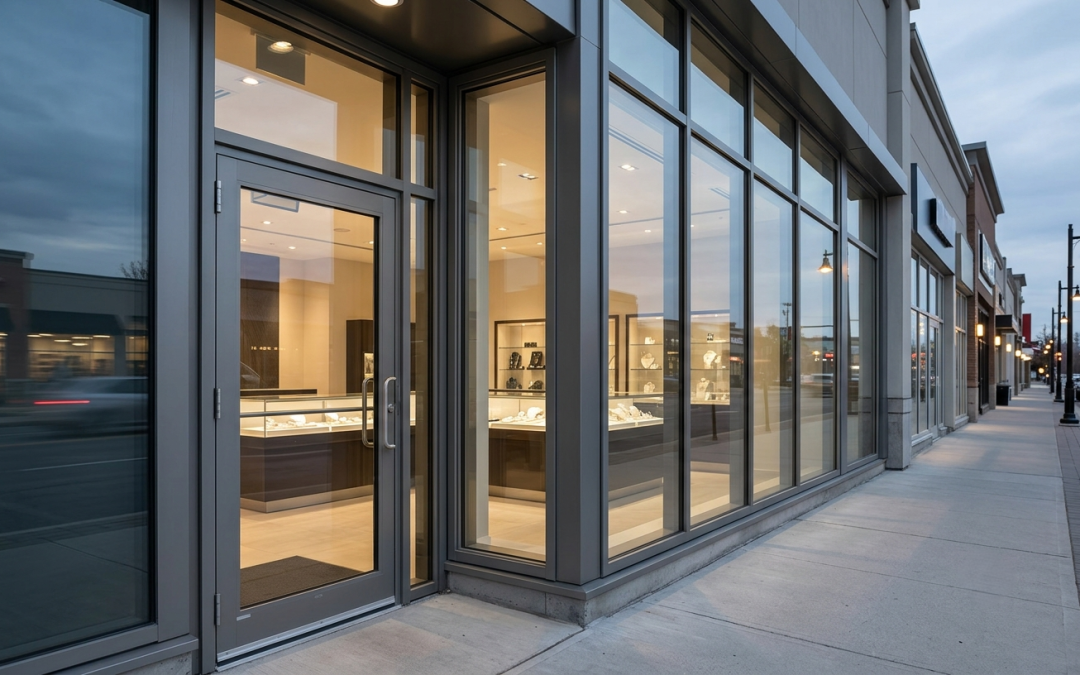
Security glazing is glass that has been engineered or upgraded to resist impact, so that a would-be intruder cannot smash through a storefront in seconds. For retailers, the math is simple: most break-ins are crimes of speed and opportunity, and every extra minute an attacker spends struggling with the glass increases the chance they give up or get caught. The right security glass storefront strategy will not make a store impenetrable, but it can turn a thirty-second smash-and-grab into a loud, slow, frustrating failure.
Centennial Glass has served Ottawa businesses since 1967 — commercial work is half of what we do — and we both install security glazing and answer the 2AM calls when standard glass fails. This guide covers the main options and how they fit together.
Laminated Security Glass: The Foundation
Laminated security glass is made of two or more glass layers bonded to a tough plastic interlayer; when the glass breaks, the fragments stay stuck to the interlayer instead of falling out of the frame. That is the property that matters in a break-in: an attacker can crack laminated glass with one blow, but they still face an intact, rubbery barrier that takes repeated, noisy effort to breach.
Laminated glass for commercial applications also brings side benefits retailers appreciate — it blocks most UV light that fades merchandise in window displays, and the interlayer dampens street noise. It can be specified as the inner or outer pane of a sealed unit, so upgrading does not mean giving up energy efficiency.
By contrast, tempered glass — the standard for most storefront and door glazing — is engineered for human safety rather than security. It is several times stronger than ordinary glass, but when it does break, it shatters completely into small granular pieces. That protects customers from injury; it does nothing to slow an intruder. Tempered and laminated glass solve different problems, and many storefronts use both: tempered where safety codes require it, laminated where security matters most.
Security Window Film: Upgrading the Glass You Already Have
Security film is a heavy-duty polyester film bonded to the interior surface of existing glass, designed to hold broken glass together in the frame much the way a laminated interlayer does. For retailers who are not ready to replace whole storefront panels, commercial safety and security window film is the most cost-effective upgrade available: it adds impact resistance and forced-entry delay to glass that is otherwise perfectly serviceable.
Film has practical advantages — it installs with minimal disruption to your sales floor, it can be combined with solar-control or privacy properties, and it also protects against flying glass from accidents and severe weather. Its limits are equally practical: film performance depends on proper installation and edge anchoring, and it upgrades existing glass rather than replacing aging or damaged panels. If a sealed unit has already failed or a panel is cracked, replacement with laminated glass is usually the smarter spend.
Don’t Forget the Door
Most retail break-ins target the entrance, not the display window. Glass doors concentrate everything an intruder wants: a handle, a lock, and a single pane between them and the till. A security review of any storefront should look hard at commercial glass doors and entrances — the door glass itself, the condition of the closer and lock hardware, the frame anchoring, and the sidelites and transoms around the door, which are often the weakest glazed elements in the elevation.
Practical entrance upgrades include laminated glass in the door and sidelites, security film on surrounding panels, and ensuring hardware is commercial-grade and properly adjusted. For retailers planning a broader refresh, it is worth reviewing glass solutions for retail storefronts as a package, since combining security upgrades with planned replacement work keeps costs down.
Layered Security, Backed by 24/7 Response
No glazing makes a storefront break-in impossible — the honest goal is delay, noise, and visibility, layered with good lighting, alarms, and cameras. The final layer is what happens when something does break. Centennial Glass operates 24/7 emergency service across the entire Ottawa region: emergency commercial glass repair crews provide temporary boarding and security, safe cleanup, and fast permanent replacement, along with insurance claim documentation assistance.
That combination — tougher glass up front, rapid response when needed — is why Ottawa businesses stay with us for decades:
“We’ve dealt with this company since 1993! Started with my business and furthered that relationship with work at home. Always had exceptional service and quality workmanship. Their after service is excellent as well. Whether it was replacing our front window at the store In the middle of the night after a break-in or warrantying a small rubber seal on our home shower, they consistently come through for their customers.” — Marc Spinnewyn, 5★
Frequently Asked Questions
What is the best glass to prevent storefront break-ins?
Laminated security glass is the most effective practical option for most retail storefronts. It holds together when struck, forcing an intruder into a prolonged, noisy effort. Higher-security laminates and bullet-resistant configurations exist for high-risk applications, but standard laminated glass deters the typical smash-and-grab.
Is security film as good as laminated glass?
Security film significantly improves how existing glass behaves under impact and is far better than untreated glass, but a purpose-built laminated unit generally offers stronger, more consistent performance. Film is the right choice when the existing glass is in good condition and budget or disruption is a concern; laminated glass is the right choice when panels are being replaced anyway.
Does tempered glass stop break-ins?
No. Tempered glass is harder to break than ordinary glass, but once it breaks it disintegrates entirely, leaving the opening clear. It is a safety product, not a security product.
What should I do immediately after a storefront break-in?
Keep staff away from the broken glass, contact police, photograph the damage for your insurer, and call a 24/7 glass company to board up or install temporary glazing. Centennial Glass handles emergency boarding, documentation assistance, and permanent replacement across the Ottawa region.
Talk to Ottawa’s Storefront Security Specialists
Whether you want to harden your storefront before something happens or you need glass replaced after a break-in, we can help — any hour, any day. Call us at 613-738-9500 or contact Centennial Glass for a security glazing assessment.