

Shower Door Leaking? Sweeps, Seals and Fixes
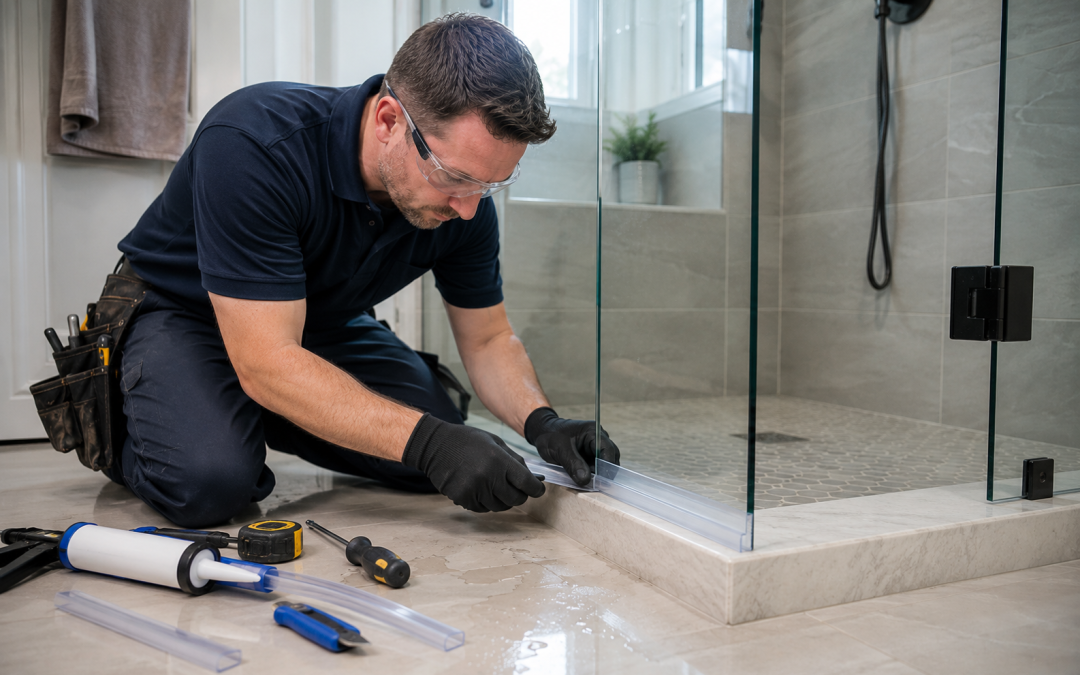
A leaking shower door is usually not a glass problem — it’s a worn-out part problem. The flexible sweeps and seals that close the gaps around shower glass harden, shrink, and crack over time, letting water escape onto the bathroom floor. In most cases the fix is a simple, inexpensive part replacement; occasionally, a persistent leak points to an installation or design issue that needs a professional eye.
Centennial Glass has served Ottawa since 1967, and with more than 1,000 shower installations a year we’ve seen every kind of shower leak there is. Here’s how to diagnose yours and what to do about it.
First, Find Where the Water Is Actually Escaping
Before buying parts, run the shower for a few minutes and watch (or have someone watch from outside the enclosure). Leaks almost always come from one of these places:
- Under the door — the most common path. The door sweep along the bottom edge has worn out or fallen off.
- Along the door’s side edges — the vertical seal between the door and the adjacent panel or wall jamb has hardened or shrunk.
- At the hinges or pivot points — water splashing directly at hinge gaps on frameless doors.
- At the bottom corners — failed caulking where the curb, wall, and glass meet.
- Over the top or around the enclosure — not a seal failure at all, but spray escaping a door that’s too short, a panel that’s too narrow, or a showerhead aimed at the opening.
Knowing which path the water takes tells you whether you need a sweep, a seal, fresh caulking, or a design fix.
Replacing a Door Sweep (the Most Common Fix)
A door sweep is the clear vinyl or polycarbonate strip that runs along the bottom edge of the glass, usually with a flexible fin or drip rail that directs water back into the shower. Sweeps live a hard life — soaked daily, dragged across a curb, baked by hot water — and most need replacing every few years.
The replacement itself is straightforward:
- Slide or pull the old sweep off the bottom edge of the glass. Most snap-on sweeps come off with steady hand pressure.
- Measure the glass thickness — typically 6 mm (1/4″) for framed and semi-frameless doors, 10 mm (3/8″) or 12 mm (1/2″) for frameless. The sweep must match the glass thickness exactly.
- Measure the door width and cut the new sweep to length with a fine hacksaw or utility knife.
- Snap the new sweep on, drip rail facing into the shower.
The catch is finding the right profile: sweeps come in dozens of shapes, and an ill-fitting one will leak or drag. Bring the old sweep (or a photo and your glass thickness measurement) to a glass shop. Our showroom stocks a wide range of shower handles and hardware, and our counter staff can match sweeps and seals on the spot — many small repairs qualify for while-you-wait service.
Replacing Side Seals and Refreshing Caulking
Vertical seals between door and panel work the same way as sweeps: match the glass thickness and the seal profile (flat fin, bulb, or “h”-shaped), cut to length, and press on.
For leaks at the bottom corners, the fix is usually caulking. Strip out the old silicone with a plastic scraper, clean the joint with rubbing alcohol, let it dry completely, and apply a fresh bead of 100% silicone rated for kitchen and bath. One professional habit worth copying: on the inside of the enclosure, caulk only where the manufacturer specifies — over-caulking can trap water inside channels that are designed to drain.
When the Door Itself Is the Problem
If water escapes through a gap at the hinge side, or the door has visibly dropped so its bottom edge no longer sits parallel to the curb, the hardware may need adjustment. Frameless doors hang on precision shower door hinges that can loosen slightly with years of use; a small adjustment restores the even gaps the seals were designed for. This is a job worth leaving to a technician — the panels are heavy tempered glass, and over-tightening hardware can stress it.
When a Leak Means It Was Never Right to Begin With
Some “leaks” are really design or installation shortfalls that no sweep will cure:
- A curb that slopes outward (toward the bathroom) instead of inward
- An enclosure opening that’s too generous for the showerhead position
- Glass cut out-of-square so gaps vary from top to bottom
- A frameless layout chosen where splash patterns really called for more coverage
It’s worth understanding the trade-offs between enclosure styles — our guide to frameless vs. framed shower enclosures explains where each design manages water best. By design, frameless enclosures are water-resistant rather than hermetically watertight; small, controlled gaps are normal, and the goal is directing water back to the drain.
When to Call a Professional
If you’ve replaced the sweep and seals and water still finds a way out — or if the door has dropped, grinds against the curb, or swings unevenly — have a technician assess it. Centennial Glass repairs and adjusts shower doors across Ottawa, with same-day service available for many repairs, and our work is backed by a 2-year workmanship commitment (see our shower door warranty information). Customers stay with us because we stand behind installations for the long haul — as Emily, a 5-star reviewer, wrote about a door we’d installed years earlier: “the service tech came in quickly and adjusted the door in a matter of minutes.”
FAQ
Why is my shower door leaking at the bottom?
The door sweep — the flexible strip on the bottom edge of the glass — has most likely worn out. Sweeps harden and crack after a few years of daily use and are inexpensive to replace.
How often should shower door sweeps be replaced?
Most sweeps last three to five years depending on water hardness, cleaning products, and use. Replace yours when it looks cloudy, cracked, or stiff, or when you notice water escaping under the door.
Is it normal for a frameless shower door to leak a little?
Frameless enclosures are designed to be water-resistant, not waterproof. Minor moisture at the gaps during a direct spray is normal; steady streams of water pooling on the floor are not, and usually mean a worn seal or an adjustment issue.
Can a leaking shower door damage my bathroom?
Yes — repeated leaks can wick into grout lines, baseboards, and subflooring. Fixing a worn sweep promptly is far cheaper than repairing water damage.
Stop the Leak This Week
Bring us your old sweep, or have one of our technicians diagnose the leak at your home. Call Centennial Glass at 613-738-9500 or contact Centennial Glass — no project too large or too small.