


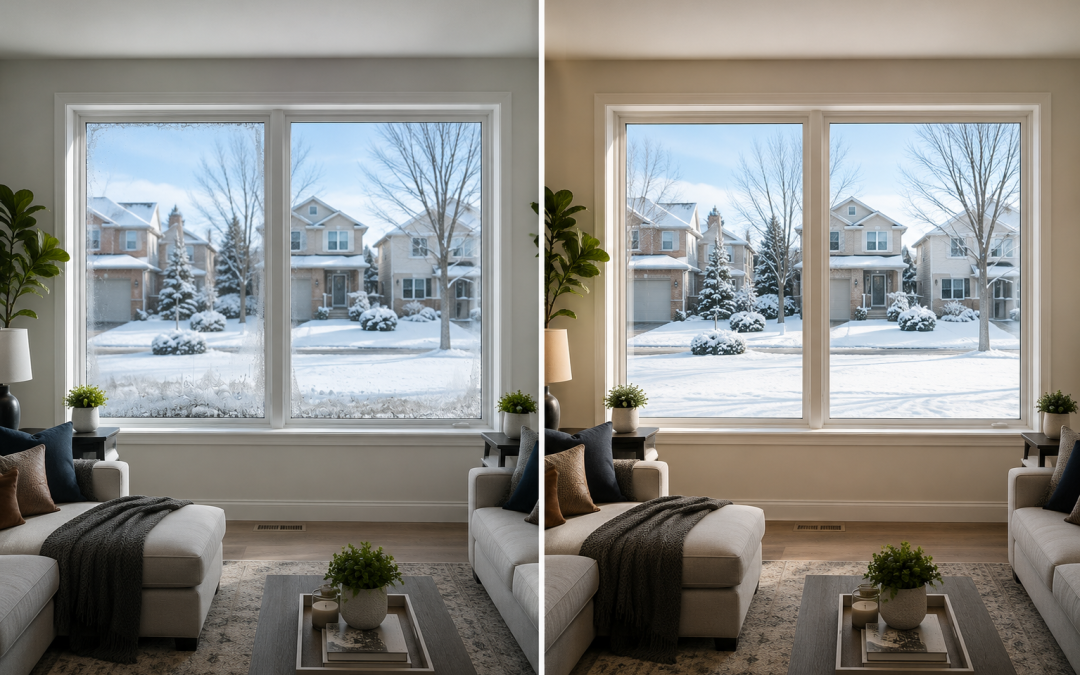
Double-pane windows contain two sheets of glass separated by an insulating air space; triple-pane windows add a third sheet and a second air space, increasing insulation, condensation resistance, and (in some configurations) noise reduction. In a climate like Ottawa’s, where winter temperatures regularly sit far below freezing for months, the question is not whether triple-pane insulates better (it does), but whether the extra cost makes sense for your home, your windows, and how long you plan to stay.
Centennial Glass has supplied and installed both across the Ottawa region since 1967, for homes and businesses alike, so here is the practical comparison without the sales pitch.
How Double-Pane Windows Work
A double-pane window is built around an insulated glass unit: two panes sealed to a spacer with a dry air space (often filled with argon gas) between them. The trapped gas layer slows heat transfer dramatically compared with single glass. Add a Low-E coating, an invisible metallic layer that reflects heat back toward its source, and a modern double-pane unit keeps winter heat in and summer heat out far better than anything built a few decades ago. You can read more about how these assemblies are constructed on our insulated glass units page.
For most Canadian homes, double-pane glass with Low-E and argon is the modern baseline: a major upgrade over old single glazing or failed units, at the most accessible price.
How Triple-Pane Windows Improve on It
Triple-pane glass adds a third pane and a second sealed cavity. The benefits compound:
- Better insulation. Two gas-filled cavities and up to two Low-E coatings cut heat loss further: the difference you feel standing beside a big window on a -25°C night.
- Warmer interior glass surface. A warmer inner pane means less interior condensation on cold mornings and less of the “cold radiating off the window” sensation that makes rooms feel chilly even when the thermostat says otherwise.
- Less temperature swing near windows. Rooms with large glass areas stay more comfortable, and the furnace cycles less.
- Potential noise reduction. The extra mass can help with noise, though acoustic performance depends more on pane thicknesses and laminated layers than on pane count alone.
The trade-offs are real too: triple-pane units cost more, weigh more (which the frame and hardware must be built to carry), and the energy savings over a good double-pane unit are incremental rather than transformational.
Which Makes Sense for an Ottawa Home?
Triple-pane is strongest when:
- You are replacing windows anyway and plan to stay in the home long enough to enjoy the comfort and savings.
- The room has large glass areas or faces north into the wind.
- You are bothered by condensation on the glass during cold snaps, or by cold zones near windows.
- You want the quietest, most comfortable option and the budget allows it.
Double-pane remains the smart pick when:
- Budget needs to stretch across many windows: upgrading every window from old or failed glass to good double-pane usually beats upgrading half of them to triple-pane.
- The home is well sealed and the windows are modest in size.
- You are replacing only the glass: if your frames are sound, a new double-pane sealed unit restores full performance without new windows, and frame depth may limit thicker triple units anyway.
Remember that the glass package is only part of the equation: air leakage around sashes and frames undoes premium glass quickly. Our pieces on choosing the best glass for your Ottawa windows when replacing and how your windows and doors can help you save at the thermostat cover the bigger energy picture.
Is the Upgrade Worth It? What Owners Say
Whichever pane count you choose, moving from tired old windows to modern insulated glass is where the dramatic difference happens; owners feel it the first winter:
“We have a house that was built c.1920 and the windows needed upgrading. We had Centennial glass install double hung All Weather Windows throughout the house, and we’re so happy with them. They replaced the transoms, doors, and installed the hardware, too. The house is significantly warmer and working with Tom and his team was lovely.” — Rebecca Fernando, 5★
Because Centennial Glass fabricates sealed units in-house and installs complete windows, we can quote both routes, glass-only upgrades into your existing frames, or full replacement with double- or triple-pane packages, and tell you honestly which delivers more comfort per dollar in your house.
FAQ: Double-Pane vs Triple-Pane
Is triple-pane worth it in Ottawa?
Often, yes: Ottawa’s long, cold winters are exactly the climate where triple-pane’s extra insulation and warmer glass surface pay off in comfort. Whether it is worth the premium over good Low-E double-pane depends on window sizes, exposure, and how long you will stay in the home.
Do triple-pane windows stop condensation?
They reduce it substantially. The interior pane stays warmer, so moisture is less likely to condense on it during cold weather. Indoor humidity levels still matter, though: no window overcomes a chronically humid house.
Can I put triple-pane glass in my existing window frames?
Sometimes. Triple-pane units are thicker and heavier, so the existing frame must have the depth and the hardware strength to accept them. A measurement visit settles it quickly; otherwise a high-performance double-pane unit is usually available for the same frame.
How much more does triple-pane cost?
It varies by window size, brand, and glass options, so get a written quote for your specific windows. Compare the double- and triple-pane lines side by side for the same opening before deciding.
Get a Side-by-Side Quote for Your Home
Centennial Glass has been helping Ottawa homeowners stay warm behind good glass for 55+ years. Call us at 613-738-9500 or contact Centennial Glass for a double- versus triple-pane quote for your home.